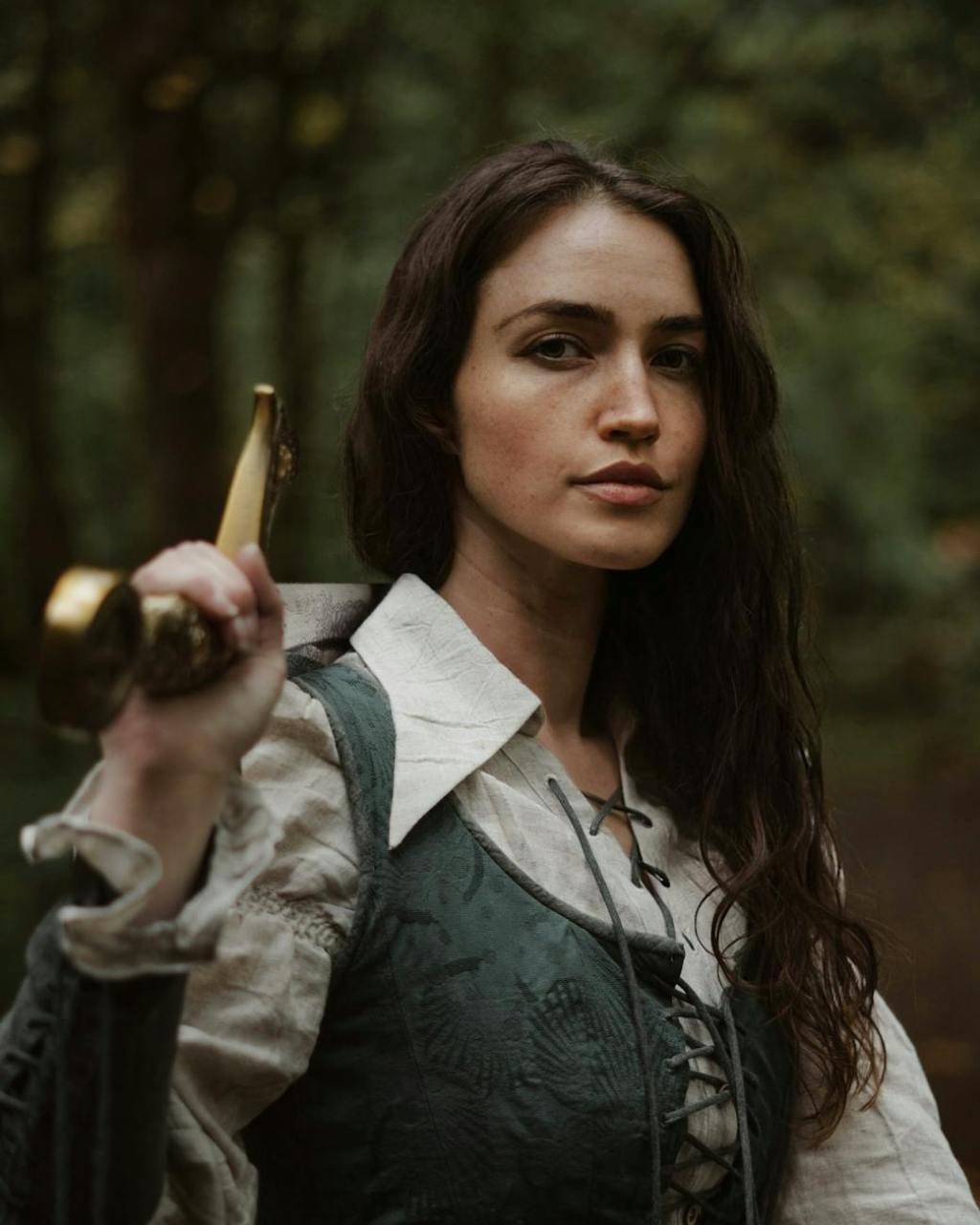
Certain female characters can spark a passionate debate just by their mention. And it’s all about the same basic question—how objectively “good” is the character in the eyes of the fans?
Rating objectivity in matters of taste is, simply put, a futile matter. The only metrics by which we can judge the “goodness” of a character are their internal consistency, and if they support any problematic content.
If the character acts consistent with their established personality, and they aren’t being used to push any harmful beliefs—then, objectively speaking, your character is “good.” Any feeling beyond that is pure opinion.
And we’re all entitled to our own opinions. I’m allowed to loathe Tony Stark while other people kiss the ground he walks on. People are allowed to believe Steve Rogers is somehow not as perfect as he’s supposed to be, while I’m free to acknowledge his superior nature.
Nobody’s required to like Captain Marvel; just as the fans who count her among their favorites are perfectly within their means to do so. And the whole world doesn’t need to fall in love with Rey Skywalker; while those who have are more than welcome to fangirl over her.
The reason female characters earn such scrutiny is the same root cause as a good number of problems in the world: misogyny.
* * *
You can’t talk about the portrayal of strong female characters without talking about misogyny. The issue will always be rooted in prejudice—because, let’s face it, that’s what started the problem in the first place.
At first, the debate came from a place of relatively good meaning. People started to realize women were more often than not cast in the role of a helpless, emotional damsel. They realized they needed to break free of the mold of “perfect hyperfeminine waif who always needs a man to rescue her.”
Unfortunately, some people took that in the direction of “a woman needs to be like a man in order to be strong.” They dressed their female MCs up with notably male traits, and began the “not like other girls” trend—the phenomenon where a girl shuns the traditionally feminine traits of her peers in order to feel superior to them.
The reasons for doing so were usually threefold:
1) The girl feels as if she’s failing at traditional femininity, so she casts it in an unsavory light to feel better about herself.
2) Girls are expected not to be sluts who only want the attention and sexual favors of a man. So the “unusual” girl is sexually pious, indifferent to the advances of or any attractions to men. To contrast her, the feminine, or “slutty” girls—the ones who care about makeup, hairstyling, and how they dress—are painted as emptyheaded whores.
3) The author and the readers may be queer to some degree, and don’t understand why women would want to practice traditional femininity, nor to get the attention of men. Usually, whether or not they’re aware of their own orientation, they’re still uncomfortable with the idea of queerness in general, and therefore have to “justify” why it’s okay that their MC is different—usually within a heterosexual context.
Creating a female character who acts more traditionally “manly” is only an issue if the character clearly sends the message that being a woman is wrong. Take Luisa from Encanto, for example—she’s physically strong and far more muscled than the average woman. But she never puts down others. She’s not threatening anyone by being less feminine (except the conservatives, that is).
We have to remember that any evaluation of a female MC should have nothing to do with how masculine or feminine the MC ends up being. Women are already raked across the coals for that in real life.
If you’re making your character more masculine, then reinforcing through the text that she’s better than other women—then that’s not good.
If you’re crafting your MC authentically, then making sure the readers know you support genuine self-expression—then that’s perfectly fine.
The only metrics by which we can judge a female character are the same as anybody else: is her characterization consistent, and does she endorse problematic beliefs?
I do agree that we should make sure there are still female characters who paint femininity in a welcoming light. But we have to accept that there will also be female characters who are physically strong, and/or who don’t conform to traditional femininity.
Our goal should be to support all non-problematic female characters—not to shape new sets of restrictive standards for them.
We also have to take into account that nobody talks about male characters in the same way. You can find plenty of tips on general characterization, as well as specific critiques of female MCs—but rarely, if ever, dissertations on only male MCs. You won’t find nearly the same volume of posts about “how to write a soft male character;” nor people accusing men of being Mary Sues.
* * *
Speaking of which…if we’re going to talk about strong female characters, then we have to address the Mary Sue.
There are two common types of Mary Sues—the perfect, pious trophy meant to push misogynistic standards on impressionable readers; and the woman who’s simply threatening to the male gaze.
Number one is what I like to call the young adult Mary Sue. Just about every major YA series published since (and including) Twilight is guilty of this one. The authors here, whether willingly or thanks to internalized beliefs, have upheld out-of-reach and often contradictory standards in order to reinforce misogynistic ideals.
That’s why the MCs in such stories tend to be:
1) Beautiful but chaste. They need to conform to conventional beauty standards; though they’re not allowed to be vain about it, nor to use their beauty for anything other than giving pleasure to a male audience.
2) Intelligent but not overpowering. They have to be able to handle other people’s problems, but not intimidate men with their intellectual prowess.
3) Excellent at fighting, for the same reasons as the last point. These women are required to carry whatever burdens are thrown at them, be they emotional, intellectual, or physical, without actually appearing to be superior to the men in their lives.
Teenage girls are supposed to look upon these characters and understand that they must be: desirable to boys (not girls, of course, because queerness is often frowned upon in these circles), yet not a slut; they must be able to help anyone and everyone who requests their assistance; and they must be sensitive, yet be able to hold their own. They must empathize with everyone, but never break down too much to fail.
The second type of Mary Sue is a woman who’s a perfectly realistic and likable character; but because she’s better at doing something than a man, then some people think she’s overpowered and unrealistic.
We need to remember that many people, whether or not they realize it, tend to label non-problematic female characters as Mary Sues because they don’t like the idea of women stepping outside of their pre-determined boxes. A girl who can wield a battle-axe is abnormal. A queen who skewers her male court with her wit is unlikely. A superhero who can kick more ass than her male counterparts is overblown. It makes AMAB audiences (and AFAB people with internalized misogyny) feel uncomfortable to accept that a man can be worse than a woman at any given task—especially things deemed traditionally “masculine.”
How do you identify each type?
YA Mary Sue: does she create expectations that seem unrealistic, or could inspire feelings of shame within the reader?
Mislabeled Mary Sue: If you applied the same abilities to a male character, would it suddenly seem normal?
And you don’t have to be outright misogynistic to think about things that way. When I was younger, I’d experience flashes of discomfort at AFAB characters showing confidence and strength. I’d think the storytellers were just doing it to pander to a particular audience.
But when I grew up and gained some maturity, I realized that’s just internalized misogyny talking. Women can be just as kickass as men. If a male character can get away with something that a female character can’t, then the only explanation for the discomfort towards the latter is misogyny.
And if you’re bothered by either gender being that way—then congratulations! You simply dislike the trait, and not women in general.
Let’s look at Rey, for quite the pertinent example. People love citing her as the poster child for a Mary Sue. But Rey is just a victim of this new wave of misogyny—the threat that people feel from female characters who are just as, or sometimes even more capable than, men.
Many fans will argue that Rey should never have been able to fight Kylo Ren in their final duel at the end of The Force Awakens. But why is that? This is a woman who’s been on her own since she was five, learning how to fight and fend for herself. In terms of strength, she’s spent most of her life scavenging, climbing around the physically demanding environment of a Star Destroyer. In terms of fighting prowess, she regularly uses a quarterstaff, implying she’s gotten into a good number of quarrels before.
And let’s take a look at Rey’s opponent. People like to forget that Kylo Ren was just shot by Chewbacca’s crossbow—a weapon that was shown repeatedly throughout the movie to be extremely powerful. Ren repeatedly bleeds and pounds at his wound throughout the duel, reminding us that he is not exactly in top shape. And we don’t really have a metric for how good Ren is at dueling. The Jedi are gone, after all—who exactly has he been fighting with? Why are we assuming he’s the most talented swordsman ever?
So Kylo Ren and Rey are, by all accounts, pretty fairly matched.
Not to mention, how could we refuse to accept that Rey’s circumstances could prepare her for the duel—but we could accept that Luke Skywalker could, after spending his childhood in civilian-grade vehicles shooting womp rats in his spare time, have commandeered a military fighter jet for the first time in his life, then managed to hit the exhaust port on the Death Star on the first try?
But he had the Force! you could argue.
So did Rey.
So what’s the difference?
We all know—and while it can be uncomfortable to face the misogyny that may be buried deep within us, we do have to face it at some point or another.
This doesn’t mean you have to like Rey’s character; but it does mean people don’t have any grounds to go around accusing her of being a bad character. She’s consistent, and she doesn’t support any harmful beliefs.*
Any opinion beyond that is just that—an opinion.
And we also have to remember that it’s unwarranted and extremely rude to tell someone else how terrible their favorite character is. If someone makes a post praising Rey, only internet trolls would think it appropriate to make a comment reminding the poster how much certain people hate her character. You’re free to dislike her; not to try to convert or tear down everyone who disagrees with you.
*I’d like to note here that I didn’t discuss Rey’s behavior within The Last Jedi or The Rise of Skywalker for two main reasons:
1) The Last Jedi arguably twisted the plot of the sequels into the standard boilerplate for a (shitty) YA novel. It forced character decisions that crudely supported a nonsensical plot. It also sacrificed Rey’s internal consistency and dignity to ensure the “soft, innocent” female was on hand to fix the older, brooding, evil MMC—even if Rey would never have developed benevolent feelings towards a man who had tortured her and Poe, tried to kill Finn, slaughtered Luke’s students, and murdered his own father.
Honestly, this could be a whole post in itself…which I might make one day. I’ll see how I feel.
2) J.J. Abrams was throwing every idea at the wall to get The Rise of Skywalker to make the cash Disney feared had stopped flowing after the controversy over TLJ. It reads like a massive fanfiction—fan service, wild twists, and action sequences perfect for watching on an IMAX screen.
Was it a hot mess? Hell yeah. Was it an enjoyable hot mess? Also hell yeah.
All that to say—The Force Awakens was the only sequel film being developed with a clear, concise, and reasonable trajectory for its plot and characters. TLJ and TRoS veered far too off course in just about every aspect to make it possible to judge Rey’s character across all three. Because she’s not the same, consistent character, and reasonable decisions were not being made by the storytellers across the trilogy.
* * *
We can’t single out female characters time and time again, and yet refuse to hold men to the same standards. If we’re already going to be writing articles and Instagram posts about how to make relatable and layered characters regardless of sex, then there’s no need to be writing additional content singling out women specifically.
It’s a double standard—the assumption that male characters don’t need to be held to the same level of scrutiny.
We’re policing fictional women just as harshly as we police real women. We can’t accept that female characters could be obnoxious, pushy, and/or physically dominating—we can’t accept that they could be just as badass as their male counterparts—without creating some sort of newly imagined set of rules to hold them accountable to.
Captain Marvel, like Rey, was also a victim of people who were wildly uncomfortable with the idea of a woman who didn’t exist purely for the male gaze. She didn’t dress seductively; she didn’t smile on demand; and she didn’t think she had to prove herself to anyone.
Once again, she was consistent with her characterization, and she didn’t support any harmful beliefs.
And once again, that doesn’t mean you have to like her—but there’s nothing objectively wrong with her character.
And if you’re going to come back and insist Rey, Captain Marvel, or any other female character you don’t like is overpowered—then why wouldn’t you argue the same for their male counterparts? The public at large has rarely condemned heroes like Tony Stark, Steve Rogers, Thor, Batman, Superman, or Luke Skywalker.
People may joke Superman’s real power is the ability to defeat whoever his current opponent is—but you won’t incite the same incendiary reaction by bringing him up that you would if you said you liked Captain Marvel.
* * *
People crave validation. It’s a part of our nature, and a part of our conditioning living in the society that we do. Countless interactions center around approval—how every piece of online media comes with a “like” button; how content shown to us is boosted when it gets more engagement; and how everyone wants to jump on the bandwagon to read the latest bestselling book or see the latest blockbuster movie.
The same goes for our opinions. Even though we may know they’re just opinions, we still crave the connection of finding a similar mind. We still feel more “justified” in our tastes when other people share them.
But we don’t need everyone to agree with us. We can dislike a non-problematic character while others celebrate them—or we could be the only fan of a niche and misunderstood MC.
At the end of the day, the best thing we can do for ourselves and each other is to offer our support. Let’s celebrate the characters we want to create—and bolster those who are making their own as well.
Let’s not pick apart and scrutinize and tear down female MCs just because we don’t like them. If they’re not pushing any problematic ideals, then let’s let the authors and fans enjoy whatever they want to enjoy.
We can still discuss our opinions with our friends and other people who we know share them; but let’s not go singling out or picking fights with other people just because they don’t agree with us.
We can still post our opinions about these characters, and discuss what we believe to be their shortcomings—but let’s not try to convince everybody else that they have to join in on our disapproval.

Leave a comment